Weight per m² is only useful when the area basis and included parts are clear. A formed cladding panel has a face, folded returns and often stiffeners and brackets, so face size × thickness understates the finished panel.
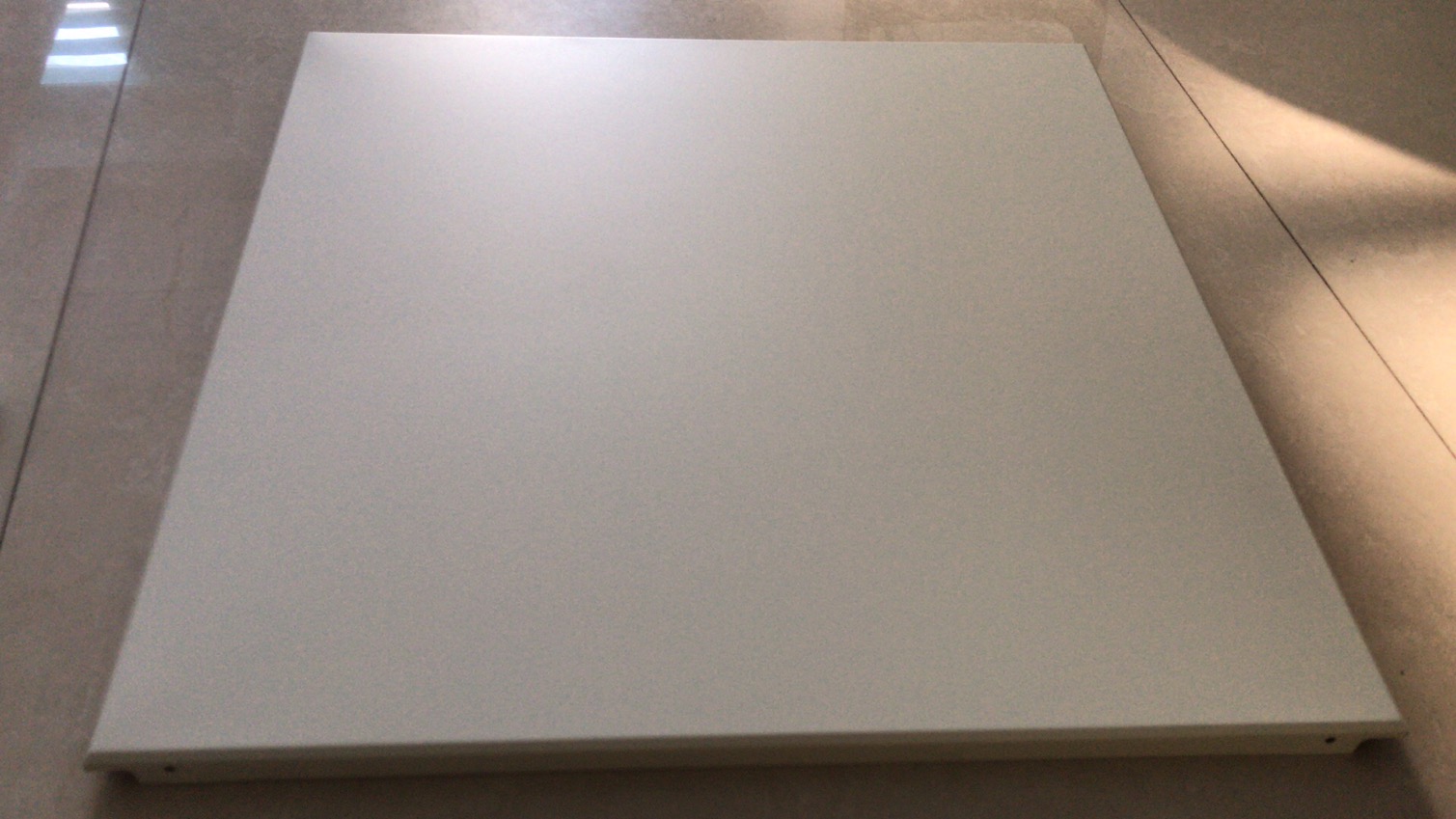
Lianhui’s custom solid aluminum panels come in 1.5, 2.0, 2.5 and 3.0 mm, AA1100 standard and AA3003 on request. The figures below are AA1100 sheet mass; thickness for wind load and fixing capacity are separate engineering checks.
Why convert the units before calculating?
Sheet mass (kg) = developed area (m²) × thickness (mm) × density (g/cm³). One square metre at 1 mm is 1,000 cm³, so at 2.71 g/cm³ (AA1100) it weighs 2.71 kg. Use the density of the specified alloy, and confirm delivered weight from the final drawings or by weighing.
| AA1100 sheet thickness | Calculated sheet mass per m² of developed metal |
|---|---|
| 1.5 mm | 4.065 kg/m² |
| 2.0 mm | 5.420 kg/m² |
| 2.5 mm | 6.775 kg/m² |
| 3.0 mm | 8.130 kg/m² |
The table excludes coating and attached parts. Use the ordered alloy and thickness in your schedule.
Which area should you use: developed sheet area or facade elevation?
The developed area includes the face and every return, taken from the approved flat pattern. Notches, holes and cut-outs remove metal; curved panels use their developed area, not the projected rectangle.
Quick estimate: a 1.0 × 2.0 m face with 25 mm returns on all four sides gives 2.0 + [2 × (1.0 + 2.0) × 0.025] = 2.15 m². At 2.5 mm, the face alone weighs 13.55 kg; with returns, 2.15 × 2.5 × 2.71 = 14.57 kg.
The returns add about 1.02 kg, 7.5%. For production quantities use the flat pattern with actual returns, bend allowances and reliefs.
Why keep sheet, assembly and shipping totals separate?
| Total | Include | Use |
|---|---|---|
| Sheet mass | Developed sheet minus specified openings | Material estimate |
| Panel assembly mass | Sheet, coating, stiffeners, brackets and other attached parts | Handling and project design inputs |
| Packed mass | All shipped assemblies, loose components, separators, crates and packing | Freight and unloading plan |
Stiffeners may be aluminum while brackets and fasteners are other materials; weigh or calculate each from its own geometry. A crate’s outside size gives its volume, not its weight.
How do you make the weight schedule traceable?
For each panel mark, record drawing revision, alloy, thickness, developed area, sheet subtotal, attached-part subtotal and quantity, and whether unit weight is calculated or weighed. Fix the first assembly before multiplying, since any change to returns or stiffeners changes every total.
Agree which figures go into the project review and the packing list. Container quantities vary by product, so the packed weight and volume are confirmed with the quotation. Send the panel schedule and drawings for a quote with material and packing scope.
Buying in volume? Standard ceilings ship from 150–200 m² in 15–20 working days. Get wholesale prices → · Custom project? Send drawings →