
+86 180 2450 8117 [email protected] Foshan, Guangdong, China

Can You Use Aluminum Ceiling Panels Outdoors Under a Canopy or Soffit?

When aluminum ceiling panels work outdoors under canopies and soffits, why PVDF is the finish, and when to switch from clip-in ceilings to solid aluminum cladding.

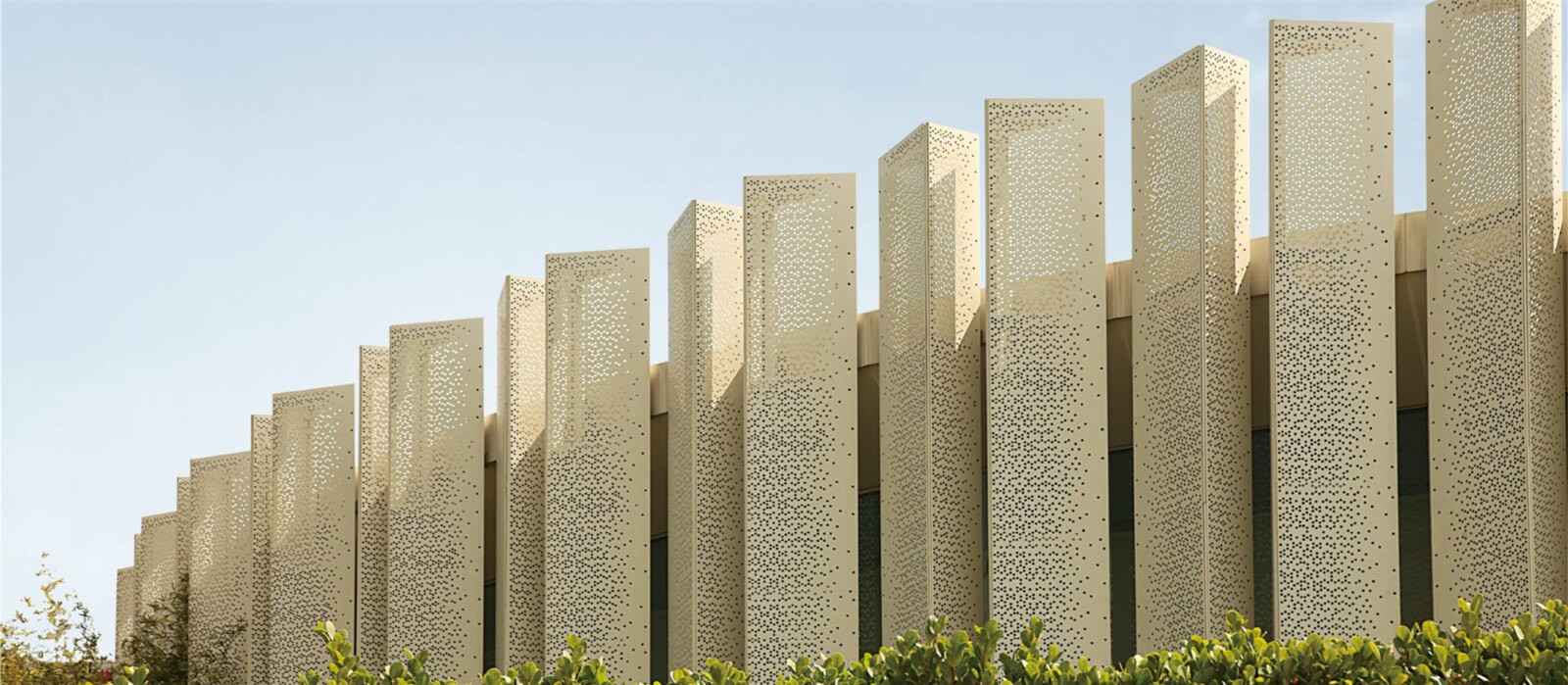
Perforated aluminum facade panels on a building exterior
lianhui-banner-perforated-facade
The Short Answer

Yes, if the panels and finish are specified for outdoors: use PVDF rather than polyester powder, a system that drains, and fixings designed for wind uplift. Under a canopy or soffit, Lianhui offers clip-in ceilings, hook-on strips up to 6,000 mm and solid cladding panels up to 4,000 mm long; the choice depends on exposure and wind.

A canopy, entrance porch or covered walkway looks like an interior but behaves like an exterior: it sees rain blown sideways, UV, dust, temperature swings and wind pushing up on the underside of the ceiling.

Which finish should an outdoor aluminum ceiling use?

If any part of the ceiling sees rain or sunlight, specify PVDF. Lianhui supplies PVDF for outdoor exposure and polyester powder for indoor use; the difference is explained in PVDF versus powder coating.

Position Finish Why
Open canopy or soffit facing sky or street PVDF UV, rain and dust exposure
Coastal site PVDF Salt-laden moisture is harder on a coating
Fully enclosed, dry entrance lobby Polyester powder Treated as an interior

Should you use a clip-in ceiling, strips or solid aluminum panels?

Option Suits Lianhui range
High-edge clip-in ceiling Sheltered canopies and lobbies where the lights and services above must stay reachable 25 or 30 mm edge; 600 × 600 mm up to 600 × 2,400 mm formats
Hook-on aluminum strips Covered walkways and passages 150, 200 or 300 mm wide; lengths up to 6,000 mm
Solid aluminum cladding panels Exposed soffits and wide canopies Up to 4,000 mm long; made to the panel schedule

Solid panels are formed with folded returns and rear stiffeners and fixed to a supporting frame. The project engineer sets the fixing for wind uplift, whichever system you choose.

What happens to wind and water under a canopy?

Wind that enters the open side of a canopy pushes up on the ceiling, so ask the engineer whether panels need hold-down fixing and do not assume an indoor clip-in detail is enough.

Rain that blows in must be able to drain. Avoid pockets that hold water, and keep aluminum from touching steel where water can sit, as set out in the galvanic isolation guide.

How do you allow for movement at the edges?

Aluminum expands and contracts with temperature, and outdoors the swing is larger than indoors. Leave the movement allowance set out in the joint design; the thermal movement guide shows how to read it.

What should the order say for an outdoor ceiling?

  • Where it is used: open, sheltered or coastal
  • Finish: PVDF for outdoor exposure
  • Panel type: clip-in, strip or solid panel
  • Fixing and wind uplift: designed by the project engineer
  • Drainage and the edge detail
  • A finished sample before the full order

Lianhui supplies from an MOQ of 150–200 m² per product category; solid panels start with a 2–4 working-day drawing review. Send the canopy plan and section with the canopy plan and section.
Common Questions

Can an indoor clip-in ceiling be used outside?

Only if it is specified for outdoors. Lianhui uses polyester powder for indoor ceilings and PVDF for outdoor exposure, and the fixing must be designed for wind uplift by the project engineer.

Do outdoor aluminum soffit panels fade?

PVDF is chosen for colour retention outdoors, which is why it is specified for exposed canopies and soffits instead of polyester powder.

How long can a solid aluminum soffit panel be?

Lianhui’s solid cladding panels run up to 4,000 mm long and are made to the approved panel schedule, with PVDF or powder finish.

← All Technical Articles

Technical Blog

Fabrication, Finishes & Ceiling Details

Machining sequences, coating methods, panel sections and dimension tables.

All Technical Articles →

Quotation checklist & spec sheet

Drawing checklist and fields for alloy, dimensions, finish, fixing details and inspection tolerances.

Download RFQ Checklist (PDF) English PDF · 2 pages

Privacy settings

Essential functionality is always available. Google Analytics is optional and starts only with your permission. We do not use advertising trackers or embedded social widgets. Fonts are served by this website.

Essential functionality
Navigation, enquiry security and your privacy preference.
Optional analytics
Page visits, confirmed enquiries, and clicks on contact or download links. We do not send form entries, drawings, email addresses or telephone numbers to Analytics.
External links
WhatsApp and other linked services open only when you choose their links. Their own privacy policies then apply.

Your choice is remembered on this browser for up to 6 months. Turn this off and save to withdraw consent. Rejecting analytics does not affect enquiries.

After a successful inquiry, a temporary confirmation cookie connects the submission to its thank-you page. It contains a random reference, not your contact details or drawings, and expires within 10 minutes or is cleared when used.

Read the Privacy Policy →