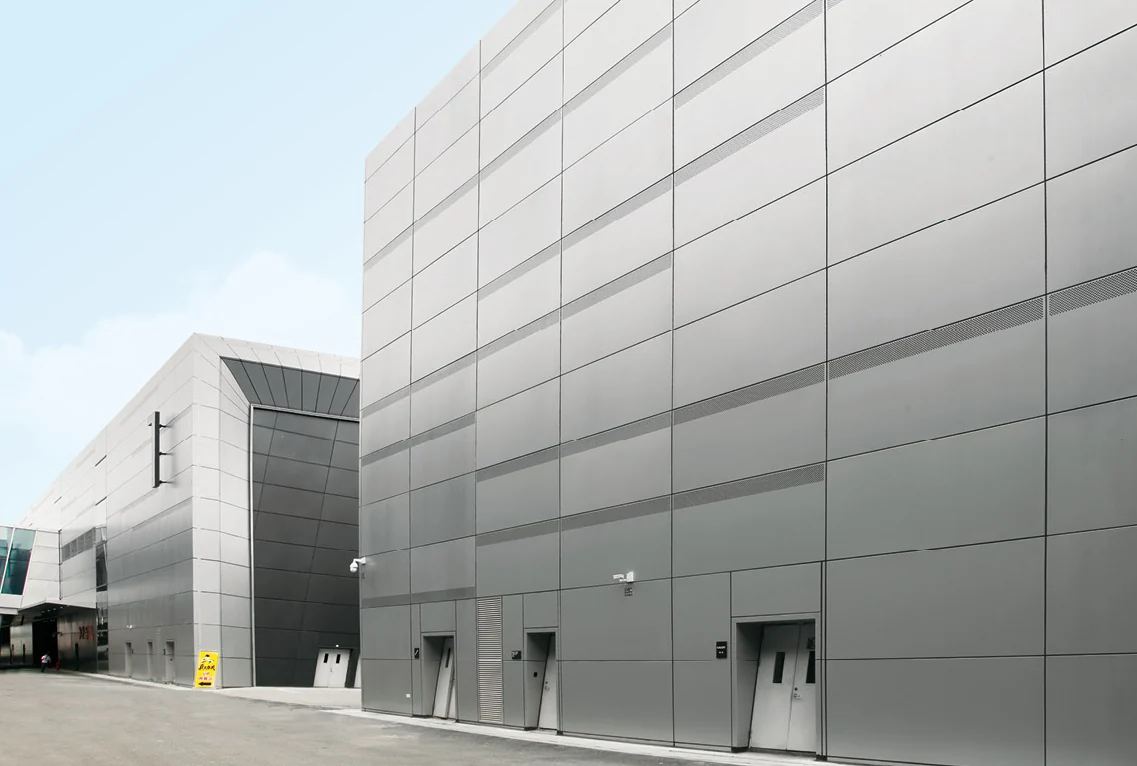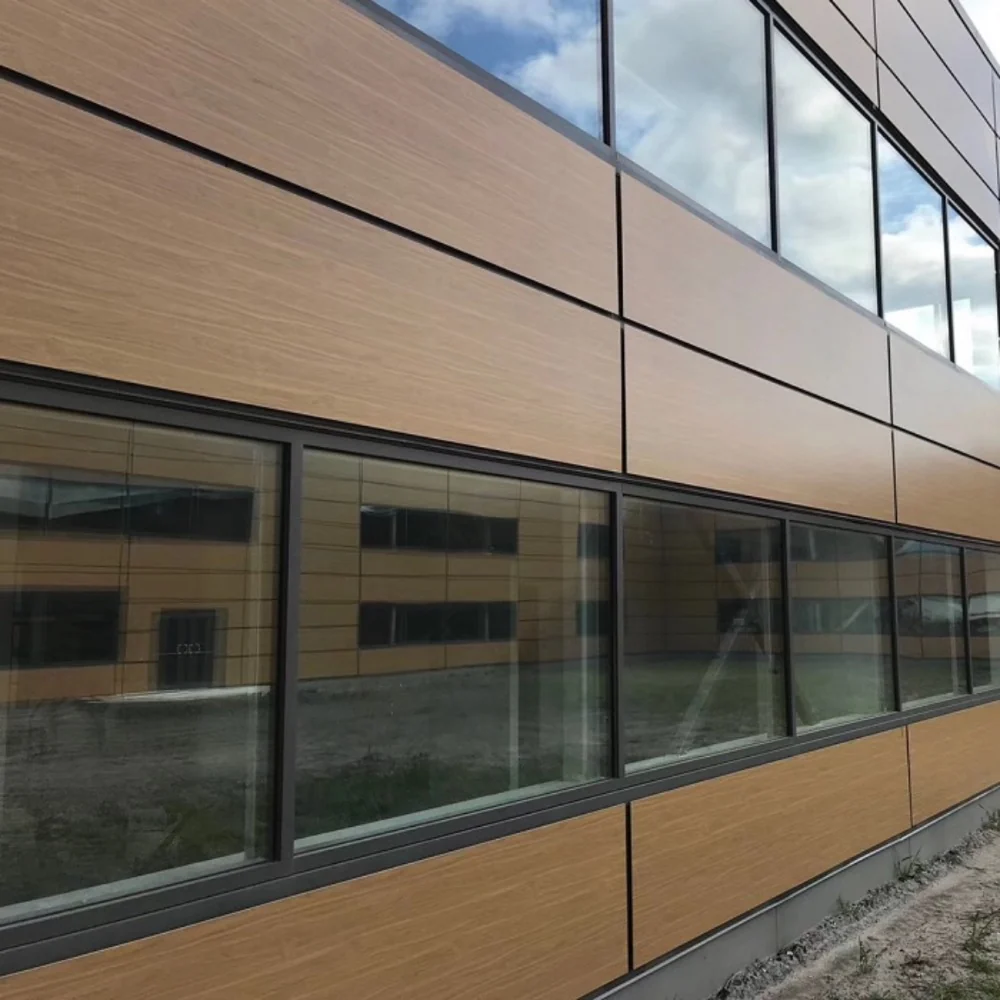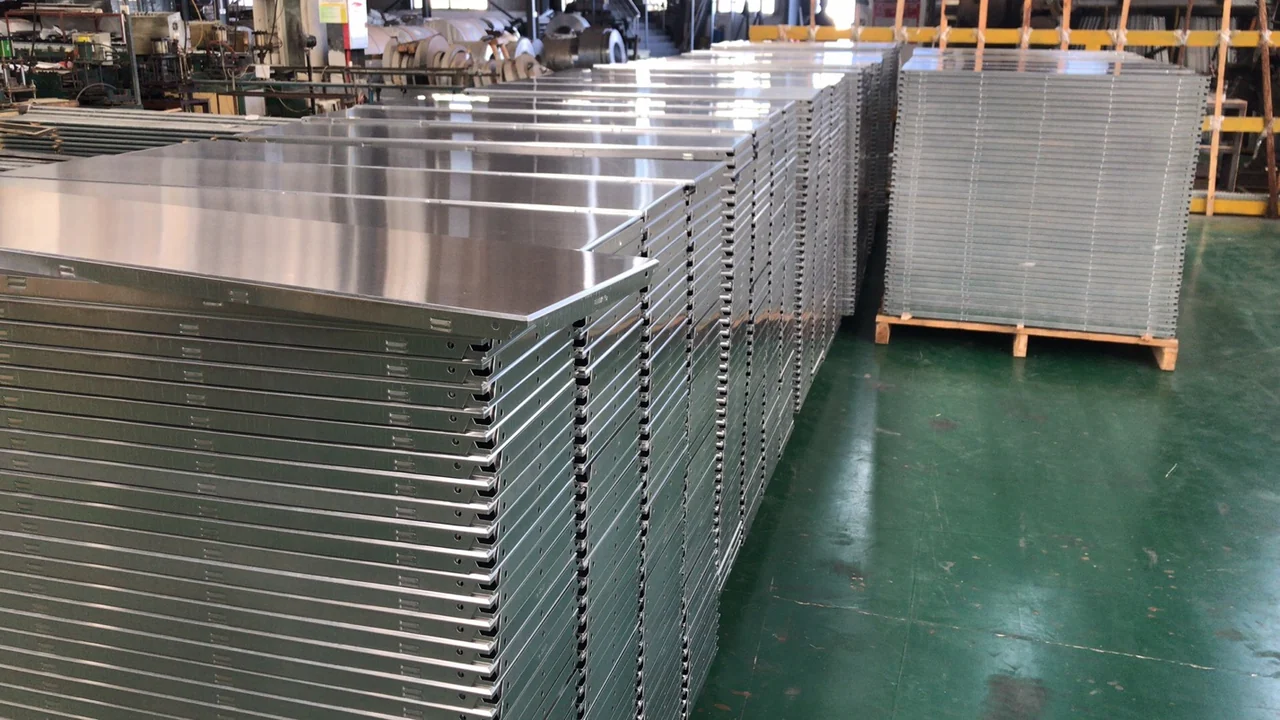
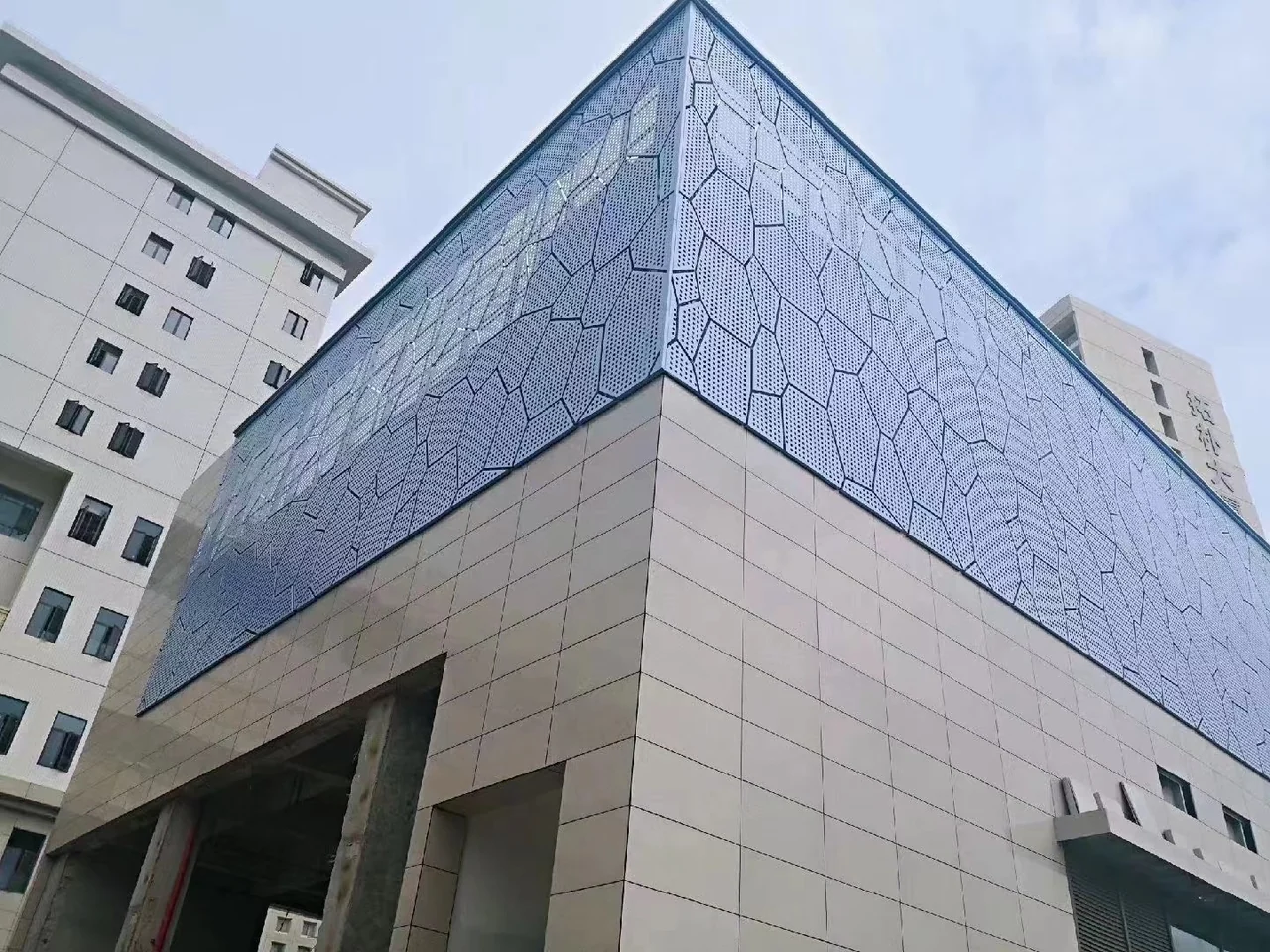
“Aluminum cladding” can describe very different constructions. A quotation for solid sheet, one for aluminum composite panel (ACP) and one for aluminum honeycomb may all show a flat metal face, but their edges, connections and manufacturing routes are not equivalent. Start with a section drawing before comparing price per square metre.
Three constructions, three different thickness descriptions
| Construction | What is behind the visible finish? | Thickness to record |
|---|---|---|
| Solid aluminum panel | One aluminum sheet, commonly formed with returns and specified rear fittings | Metal sheet thickness; folded depth separately |
| Aluminum composite panel / ACP | Aluminum skins bonded to a specified core | Each skin and the core, plus overall panel depth |
| Aluminum honeycomb panel | Face and rear skins bonded around a cellular core | Each skin, core and bond construction, plus finished overall depth |
ACP is a construction category, not one universal core formulation or fire classification. Honeycomb is also not a complete specification: core material, cell geometry, skin thickness and bonding remain necessary. A larger overall thickness does not establish how much metal is present or what span the panel can support.
Choose a fabrication route that can deliver the geometry
For a solid aluminum panel, the drawing controls the sheet, bends, corners, curvature and rear attachments. Where the shape requires welding or dressing, resolve those operations before the decorative finish. A double-curved surface requires a manufacturing review different from a simple cylindrical bend.
For a composite panel, establish how the chosen material may be routed, folded or curved and how the core is protected at edges. Processing limits belong to the selected product. They should not be copied to another composite construction or to solid aluminum.
For honeycomb, examine how the core is terminated at returns, openings and connections. Large flat faces can make the bond and local edge details especially important. If a designer changes a plain panel to one with a large service opening, recheck the section and support detail rather than treating the change as a simple subtraction of area.
Compare assemblies, not loose sheets
Give every supplier the same panel sizes, support positions, design loads and deflection criteria. Then request a connection drawing showing how loads pass from the face to the bracket and supporting structure. A stiff panel with an unresolved fixing is not a complete solution.
The envelope also needs coordinated joints, water management, interfaces and movement. A decorative face does not by itself provide a complete weather barrier. Establish which party supplies the subframe, membranes, flashings and joint components, and which party verifies the assembled wall.
Fire requirements should be evaluated for the actual product and wall build-up required by the project. Do not use the presence of aluminum skins as a substitute for identifying the core, bond and finish. Likewise, do not transfer a report from a different core or assembly merely because both products are described as aluminum panels.
Check finish, handling and future replacement
Record whether coating occurs before or after fabrication and which surfaces receive the decorative finish. Review formed corners, visible edges and the treatment of site cuts. For directional finishes, carry grain arrows into the panel schedule.
Compare the largest piece with the transport and installation route. Include access for replacing one damaged panel after adjacent work is complete. Panel weight, edge vulnerability and handling restraints influence installation planning; a “lightweight” headline is not a lifting plan.
Use one comparison sheet for competing proposals
- Exact construction, alloy/temper where specified, skin and core schedule.
- Finished geometry, allowable tolerances, support layout and fixing details.
- Finish system, exposure, sample reference and coated surfaces.
- Required structural, fire and environmental evidence for the proposed assembly.
- Included accessories, installation responsibility and exclusions.
- Delivery sequence, packaging, replacement access and spare panels.
Separate a product substitution from a price revision. A supplier offering another construction should show the changed section and all resulting interface differences. Accept the technical proposal first, then compare commercial totals on the same scope.
Send the section and the most difficult detail
For custom solid aluminum panels or honeycomb panels, send a typical section together with the largest panel, most complex corner and proposed fixing. The layer-schedule guide explains bonded constructions in more detail. Upload drawings for a project-specific quotation with the required evidence and delivery scope.